

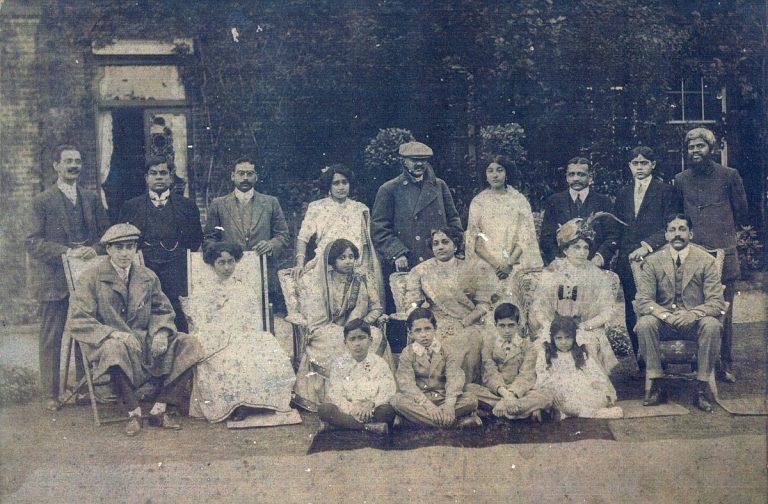
Dr Priyabrata Dey Sarkar, a Postdoctoral Research Scholar at the University of Graz, Austria has written a brief but engaging and well-researched paper that offers a vivid reconstruction of “Bexhill’s Maharajah” Nripendra Narayan’s lifelong interactions with Britain.
Dr Sarkar situates the Maharajah’s story within a broader history of Indo-British cultural encounters while also recovering a deeply personal narrative of belonging, affinity, and loss. Drawing on archival documents, architectural histories, and family papers, the author shows how the Maharajah’s education, tastes, friendships, and even his final days in Bexhill were shaped by Britain, revealing a princely life lived between two worlds.
Biographically, the Maharajah emerges as an unusually cosmopolitan Indian ruler. Born in 1862 and succeeding to the Cooch Behar throne as an infant, he was educated first in India and then extensively in Britain, becoming well known in English society through repeated visits from the 1880s onward.
A distinguished sportsman, veteran of the Tirah and South African military campaigns, and Honorary ADC to King Edward VII, he combined princely authority with a distinctly Anglo-Indian public persona. His marriage in 1878 to Sunity Devi—daughter of reformer Keshub Chandra Sen—further positioned the couple as emblematic bridge-figures between East and West.
The paper’s conclusions resonate strongly with the detailed local histories of Bexhill, where Nripendra Narayan spent the last weeks of his life in 1911. Seeking sea air to recover from prolonged illness, he leased 22 Marina Court Avenue, becoming a quiet but closely followed presence in the town.
His death there on 18 September prompted Bexhill’s only state-level funeral procession: a gun-carriage bearing his coffin, the Union Flag, military honours ordered by King George V, and crowds lining Devonshire Road in respect. The family’s gratitude was later immortalised in the Cooch Behar Memorial Fountain, unveiled by his son Jitendra in 1913—an enduring civic tribute to Bexhill’s “Maharajah.”
Dr Sarkar’s work reframes the Maharajah not only as an imperial-era mediator but as a figure whose personal story is indelibly linked to the landscapes and affections of both Darjeeling and Bexhill.
Britain-Bengal Interfaces – Maharaja’s Footprints to London, by Dr Priyabrata Dey Sarkar. You can download and read Dr Sarkar’s paper here.