

When the government updates national planning rules, it rarely makes headlines. The draft update to the National Planning Policy Framework (NPPF), published in December 2025, is no exception. Yet buried in its wording are changes that could quietly reshape how archaeology is handled in England — and what that means for Bexhill Museum.
The NPPF sets out national planning policy. Local authorities apply it when deciding where development should happen and how planning applications are assessed. While it is not law, it strongly influences decisions about housing, roads, and infrastructure — and therefore about what happens to archaeological remains uncovered during development.
For archaeology, the draft 2025 version does something important: it spells out expectations that were previously implied. That clarity is welcome, but it also brings pressure — especially for local museums that end up caring for the results. What it means in practice can be seen from Bexhill Museum’s involvement with the Bexhill–Hastings Link Road finds.
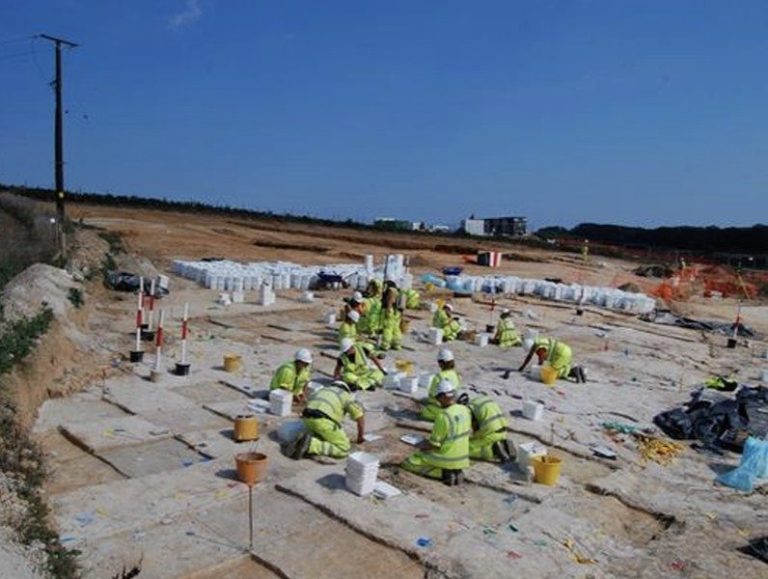
During the construction of the Link Road, archaeologists uncovered prehistoric artefacts spanning thousands of years dating back to early hunter-gatherer communities living in wetlands after the last Ice Age. Specialists have described the finds as nationally significant, particularly for what they reveal about early human mobility, climate, and landscape use.
Under agreements linked to the road project, this material has been undergoing long-term specialist study and will ultimately be transferred to Bexhill Museum. The museum has committed not only to storing the material, but to studying it, interpreting it, and making it accessible through displays, education, and research partnerships.
It’s both an opportunity and a challenge. Archaeological archives are not just boxes of objects. They include records, drawings, photographs, samples, and large quantities of digital data. Caring for them properly requires space, environmental controls, documentation systems, and specialist time — all over decades, not just project lifetimes.
One of the most notable changes in the draft 2025 NPPF is the introduction of a specific policy on “archaeological assets”. Archaeological assets include buried remains such as settlements, graves, tools, and industrial sites.
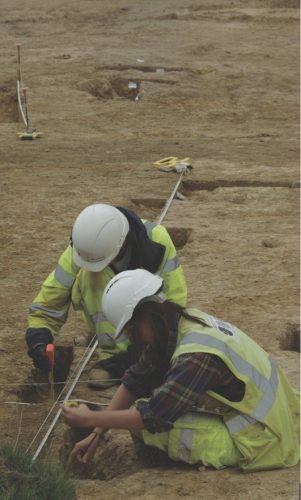
Previously, archaeology sat within broader heritage policies. Developers were expected to assess impacts, but archaeology was not always clearly separated from other historic concerns. The new draft states plainly that where development could affect archaeological remains — including those not yet discovered — appropriate investigation is required.
It also makes clear that preserving remains in the ground should be the first option wherever possible. Where this cannot be achieved, the policy requires investigation, recording, public dissemination, and archiving by suitably qualified professionals. Archaeology is no longer a background issue. It is a named and structured planning priority.
This leads directly to the question of archiving. Archaeological excavation produces far more than display-ready artefacts. The full archive — physical and digital — is what allows future researchers to understand what was found and why it matters. National planning policy already expects this material to be made publicly accessible, with records deposited in the local Historic Environment Record and archives placed in museums like Bexhill’s.
The draft 2025 NPPF makes this expectation clearer and places firmer responsibility on developers to ensure it happens. That matters because, in practice, museums often face late-stage negotiations over archive deposits, sometimes without adequate funding or space. Clearer policy makes it harder for archiving to be treated as an afterthought.
Bexhill Museum’s own experience shows why this matters. Its archaeology, social history, and documentary stores are already operating at or near capacity. Even with the creation of a new archaeological research centre and store by converting the former Egerton Park toilet block built into the museum, overall storage volume will always be limited.
Developer-funded archaeology continues to place pressure on the museum’s ability to accept new material and the museum is supporting local initiatives for a wider East Sussex solution. The aim is not to centralise everything in one place, but to develop a coordinated approach that reflects national thinking, particularly Historic England’s Future for Archaeological Archives Programme (FAAP).
This includes emerging ideas such as: clearer early transfer of ownership, so responsibility is agreed at planning stage rather than at the museum door; stronger selection, focusing on what is genuinely significant and useful; and recognition that not all archaeological material needs to be stored or accessed in the same way.
Bexhill Museum supports a distributed repository model for East Sussex. In simple terms, this would mean:
- a single county-wide intake process, so material is assessed and routed consistently;
- a hub-and-spoke storage model, where large volumes of low-access material are stored in bulk facilities, while museums like Bexhill act as “community nodes” for locally significant, studied, and displayed collections;
- and a shared digital catalogue, allowing people to discover material across sites, even if it is physically stored elsewhere.
Bexhill’s work on digital tools, including its Thompson AI platform, is intended to support this kind of joined-up access, rather than to replace long-term professional care.
The draft 2025 NPPF places greater emphasis on anticipating archaeological issues early, through local plans and better use of Historic Environment Records. That approach aligns closely with what museums like Bexhill are already experiencing: archaeology works best when it is planned for, not improvised after discovery.
The updated planning framework is therefore not just about regulation. It is a prompt to think seriously about how archaeological knowledge is stored, shared, and sustained. For Bexhill Museum, the Link Road finds are a reminder of archaeology’s extraordinary public value — and of the need for practical, collective solutions to care for it responsibly.